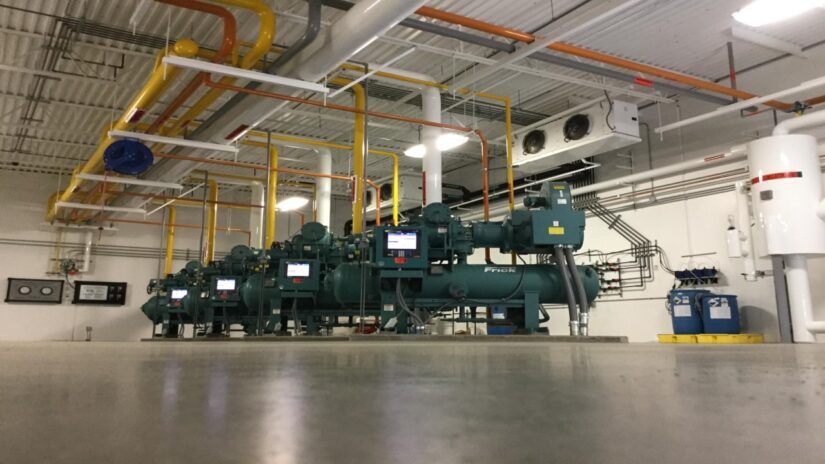
Ammonia Operator 1
Ammonia Operator 1 is where you should begin your training into industrial refrigeration concepts. The ammonia operator 1 class will ensure or help give you confidence to operate an ammonia refrigeration system. Ammonia operator 1 key focus is industrial refrigeration applications. Of equal importance, this class is available in person and online. Next, ARTS suggest that each candidate for Ammonia Operator 1 have at least 6 months experience in your company’s in-house training program, doing rounds, and basic maintenance. Furthermore, if the candidate has 20 years’ experience, but lacks the paperwork to back up that knowledge, we suggest they begin at this level. We call this certification R-717 Operator 1.
Register Today @ this link – Ammonia Operator 1
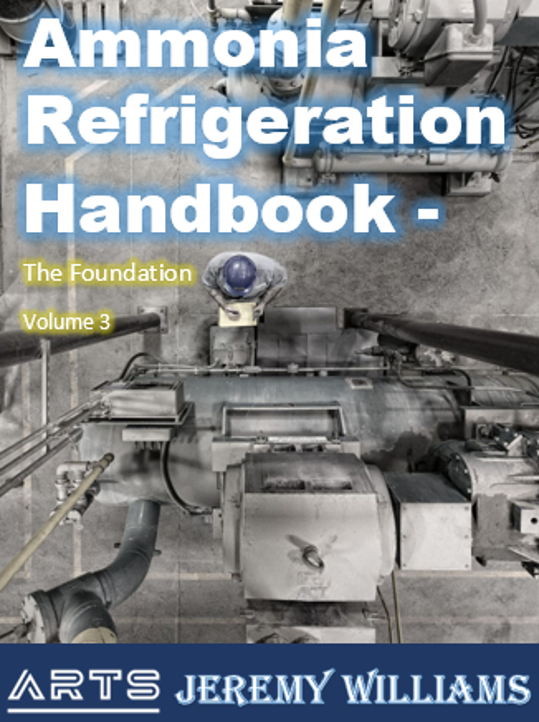 Ammonia Operator 1 students have better success when they have backgrounds and/or experience in mechanics, construction, plumbing, electrical, safety, or any blue-collar craft. Aptitudes needed for success are basic mathematics, observation, applied technology, locating information, and reading for information. The class in person is a 4-day session and online you have six months to complete. Candidates who score well on ARTS certification test provided at the end of the course tend to do well on the RETA CARO, TPC, and NUILPE certifications too. All ARTS certifications are active for three years and carrier of those credentials must follow all company and regulator procedures. This course entails a copy of the latest edition of the Ammonia Refrigeration Handbook – The Foundation. If booking a private class, you can choose between this book or RETA 1. Moreover, the Ammonia Operator 1 book is for the student to keep and reference not only during the class but their entire career. Topics to be covered are as follows: A detailed course competencies can be downloaded at the following link. Ammonia Operator 1 – Course Competencies
- RETA CARO Study Guide – Ammonia Operator 1
- Ammonia Safety – Ammonia Operator 1
- What happens when we don’t keep it in the pipes and how to safely work with ammonia as a refrigerant
- PEL
- IDLH
- LEL
- UEL
- Ammonia Leaks
- Ammonia Clouds
- Classifications
- Respirators
- SCBA
- Decontamination
- Benefits of Ammonia
- Injuries
- Water and NH3
- NFPA Requirements
- Finding Leaks
- Ammonia Hoses
- Name common uses of ammonia and describe benefits of ammonia refrigerant in terms of ozone depletion and global warming potentials (ODP and GWP).
- Describe the properties of ammonia and explain how they affect the use of ammonia as a refrigerant.
- Discuss the toxicity and flammability of ammonia and its classification as a hazardous material.
- PPE Requirements, PEL, IDLH, Ammonia Sensors, DOT 1005, Fire Diamond, LEL, UEL, B2 Classification, Minimum rinse, Four Primary Injuries, Absorption Rate to Water, Expansion Rate at atmosphere
- Discuss important features of ammonia saturation curves, reactions with metals, and MSDS criteria.
- RAGAGEP standards governing ammonia refrigeration systems and describe the four main ammonia safety concerns, steps for their prevention, and first aid treatment in the event of exposure.
- % to PPM conversions
- Requirements of 100# releases
- Minimum Protective Equipment
- Determining to Point of Refrigerant Leaks
- Sulfur Stick Applications
- PH Paper Applications
- Soap and Water Applications
- Ammonia Sensors
- Detection Tape
- PSM/RMP Regulatory Awareness / Requirements
- OSHA – PSM Regulations
- The OSHA – Safe Work Practice
- Regulatory and Best Practices Respiratory Protection
- HazWoper / HAZMAT
- General Duty Requirements
- EPA – RMP Regulations
- Bhopal India Chemical Accident that led to Process Safety Management and Risk Management Programs.
- RAGAGEP: Recognized and Generally Accepted Good Engineering Practices.
- IIAR Ammonia Refrigeration Library Awareness.
- Employee Participation within a PSM/RMP program
- Process Safety Information Awareness, Process Hazard Analysis Awareness, Standard Operating Procedures Awareness, Mechanical Integrity Awareness, Training Awareness, Management of Change Awareness, Pre-Startup Safety Review Awareness, Emergency Planning Awareness, Contractors Awareness, Hot Work Awareness, Trade Secret Awareness, Incident Investigation Awareness, Compliance Audit Awareness.
- Requirements of 7 Operating procedures Awareness
- Initials Startup
- Normal Operations
- Temporary Operations
- Emergency shutdown, including the conditions under which emergency shutdown is required, and the assignment of shutdown responsibility to qualified operators to ensure emergency shutdown is executed in a safe and timely manner
- Emergency Operations
- Normal Shutdown
- Startup following a turnaround, or after an emergency shutdown
- Responsibilities under PSM/RMP Regulations Awareness
- Maintenance Practices
- Best Practice / RAGAGEP Awareness and Requirements – Ammonia Operator 1
- IIAR
- ASHRAE
- ASME
- NFPA
- IMC
- Basic Refrigeration Cycles
- Evaporation
- Compression
- Condensation
- Metering
- Advanced Refrigeration Cycles
- Multiple Feed Headers
- Parallel Compression
- Two – Stage Compression
- Cascade Systems
- Economizer Systems
- Swing Systems
- Thermodynamics
- 8 Effects of Heat Transfer
- Laws of Thermodynamics
- Pressure
- Pressure Scale Conversion
- Positive/Negative Pressure Systems
- Temperature
- Pressure / Temperature Relationships
- Saturation
- Superheating
- Subcooling
- Heat Transfer Types
- Latent Heat
- Sensible Heat
- Insulation
- Conductivity
- Specific Heat
- Simple Heat Loads
- Bedrock Understandings
- Compressors, Evaporators, Condensers, and Metering Devices
- Explain how a positive-displacement compressor increases the ammonia vapor pressure.
- Name four primary components in single-stage ammonia refrigeration systems and describe their functions.
- Describe the functions of the oil separator, high-pressure liquid receiver, king valve, and suction accumulator in single-stage ammonia refrigeration systems.
- Insulation from High to Low side
- Tonnage
- Pipe Labels
- Valve Tags
- Open loop cycles vs closed loop
- Secondary Coolants
- Colored piping/insulated systems
- Types of Valves
- Adjusting valves
- Emergency valves
- Turning valves
- Oil draining
- Rounds / Walkthroughs
- Troubleshooting skills
- Exhaust fans
- E-Stops
- Emergency Shutdowns
- Block Flow Drawings / P&IDs
- Pressure vs Velocity
- Flow Characteristics
- Pump down / Pump Outs
- Venturi Effect
- Benulis Principle
- Industrial Halocarbons
- Square feet Calculations / Cubic Feet Calculations
- Rates: CFM, GPM, Tonnage
- Measuring Pressure: Formula, PSIG, PSIA, “hg
- Converting Pressure
- Altitude Corrections for Pressure
- Principles of Heat Transfer: Radiation, Conduction, Convection
- BTU
- Celsius and Fahrenheit Measurements and Conversions
- Sensible Heat / Latent Heat
- Specific Heat
- Conditions of a Refrigerant: Subcooled, Saturated, Superheated
- First Law of Thermodynamics / Second Law of Thermodynamics
- Latent Heat (BTU Content) of Ammonia and Water
- Compression Ratios and Limitations
- Block Flows, Process Flows, and P&ID Awareness
- Hydrostatic Expansion
- Log Books / Round Sheets
- Valve Positions Importance
- Pressure Drop / Line Resistance
- Oil Draining Concepts and Dangers of Oil Draining
- Tracking Oil
- Theoretical Discharge Temperatures
- Positive Displacement Systems
- Refrigeration Loads
- Secondary Refrigeration
- Azeotropes / Zeotropes
- Components in Parrell
- Staging Compressors
- Define British thermal unit (Btu), specific heat, sensible heat, latent heat, and tons of refrigeration.
- Explain why dual relief valves are used, describe proper positioning of the three-way diverting valve, and explain how to calculate relief valve flow capacity.
- Describe the functioning of the various stop valves used on ammonia systems and explain why angle valves are preferred.
- Describe the various kinds of check valves and solenoid valve uses in automatic control on ammonia refrigeration systems.
- Discuss the benefits of the newer electronic level controllers in the automatic control of liquid levels, safety alarms, and system shutdown procedures.
- Introduction to CIRO Trouble Shooting Screens
- Industrial Refrigeration Cycles
- Simple Single Stage Systems
- Complex Two Stage Systems
- Simple Two Stage Systems
- Complex Two Stage Systems
- Define compression ratio and explain its importance in single-stage and two-stage industrial ammonia refrigeration systems.
- Explain why flash gas removal, booster discharge-vapor desuperheating, and interstage liquid cooling are desirable in the two-stage system.
- Name the primary and secondary components of a two-stage refrigeration system and describe component functions.
- Explain why a two-stage system requires less overall power than a single-stage system.
- Explain why suction accumulators are needed and describe the damage that can result from liquid entering the compressor.
- Discuss the purposes and reasoning behind the design features, including the boil-out coil, of suction accumulators.
- Describe the various ammonia refrigerant liquid/vapor separation criteria.
- Explain how the intercooler deals with flash gas and desuperheats the booster discharge.
- Describe basic differences between a flash intercooler and a shell-and-coil intercooler.
- Describe typical configurations for alternate intercoolers provided with internally compounded compressors.
- Swing Machines
- Parallel Compression Systems
- CPR Systems
- Thermosyphon Systems
- Liquid Injected Systems
- DX Systems
- Overfeed Systems
- Hydraulically pumped
- Pneumatically transferred
- Flooded / Gravity Systems
- Describe the various functions performed within the recirculation vessel.
- Discuss the advantages and disadvantages of recirculation systems.
- Describe design features of horizontal and vertical recirculation vessels.
- Discuss the surge-volume requirements of a recirculation system and reasons for high-level alarm/cutout controls on the recirculation vessel.
- Describe the features and drawbacks of various kinds of liquid-refrigerant pumps.
- Describe the operation of pumper drum (gas-pressure) recirculation systems and controlled pressure receiver (CPR) recirculation systems.
- Evaporator Types
- Air Exchange
- Liquid Exchange
- Product Exchange
- Ice Machines
- Discuss basic details of evaporator operation, including the use of secondary coolant.
- List basic principles affecting evaporator heat transfer ability in DX and liquid overfeed systems.
- Discuss the reasons for coil fins and enhanced tube designs.
- Describe common DX and flooded liquid chillers.
- Discuss the construction and operation of evaporators used as air coils (coolers), including the benefits of penthouse installation.
- Describe the operation of various common kinds of freezers and ice makers.
- Explain how subcoolers, intercoolers, and thermosyphon oil coolers function as evaporators.
- Explain why ice and frost form on a coil and discuss the problems resulting from this formation.
- Describe the basic process of defrosting by means of hot gas from the compressor discharge.
- Explain how the soft hot gas defrost system protects large industrial coils.
- Describe common defrost methods that do not use hot gas-electric, water, continuous glycol spray, and room air.
- Describe preset timer defrost methods.
- Compressor Packages
- Reciprocating
- Briefly describe the evolution of ammonia reciprocating compressors.
- Describe typical design features of today’s reciprocating compressors.
- Explain how capacity control and proper lubrication are achieved in ammonia reciprocating compressors.
- Explain how to use volumetric and adiabatic efficiency data and the performance factor in sizing or selecting compressors for an application.
- Describe the function and basic design requirements of internally compounded reciprocating compressors.
- Screws
- Single Screw
- Twin Screw
- Discuss the developments that led to the use and acceptance of the oil-flooded screw compressor in industrial refrigeration.
- Describe typical design features of single-screw and twin helical screw compressors.
- Explain how the compression system works within screw compressors.
- Compare fixed and variable volume machines and their applications.
- Explain how the capacity-control slide valve and variable Vi slide stop function.
- Describe the general range of application for screw compressors.
- Oil Separation types and methods
- Oil cooling types and methods
- Explain why screw compressors are provided as units and describe the main systems that make up the screw compressor unit.
- Explain why a vertical or horizontal oil separator may be preferred and explain why check valves are used on the unit inlet and outlet connections.
- Discuss drive methods and oil distribution methods used on screw compressors and describe tasks provided by the lubricant within the compressor.
- Explain how the refrigerant vapor/oil separation system operates and list the methods and benefits of oil cooling in screw compressor units.
- Discuss the beneficial uses of the side port and the operation of the screw compressor capacity reduction slide valve control system.
- Name the codes and other criteria with which ammonia refrigeration systems must comply to establish and maintain a safe work environment.
- Thermosyphon oil cooling, Liquid Injection oil cooling, and water/glycol cooling
- Vanes
- Describe the basic operation of sliding-vane rotary booster compressors.
- Explain the principle of fixed volume ratio compressors.
- Describe typical rotary compressor design features.
- Explain why sliding-vane rotary compressors have been replaced by screw compressors.
- Discuss the reasons for rotary vane compressor speed limitations and the causes and effects of blade wear.
- Capacity Control
- Load / Unload attributes and engineering
- Heat of Compression
- CFM / Ton & HP / Ton
- Slugging
- Troubleshooting Oil separators
- Scroll Compressors
- Condensers
- Air
- Water
- Evaporative
- Adiabatic
- Water Treatment types
- Air / Non-Condensable Effect
- Checking for Foul Gas
- Manual Purge processes
- AUTO Purgers
- Describe the basic differences between air-cooled, water-cooled, and evaporative condensers and discuss the main operating features of each.
- Discuss the benefits of the evaporative condenser and explain why it has the lowest condensing temperature.
- Describe the design components of an evaporative condenser and explain how they work together to provide cooling.
- Discuss both the process of condenser selection and good and bad practices in locating condensers.
- Describe proper piping and equalization practices for both single and multiple condenser installations.
- Explain the need for condenser winterization and capacity control and discuss proper water treatment to control mineral and bacterial content.
- List common noncondensable vapors and discuss their effects in a refrigeration system.
- Discuss the power penalty resulting from noncondensable gases in terms of compression and loss of refrigeration capacity.
- Explain how to determine the presence of noncondensables.
- Explain how to minimize the entrance of noncondensables and describe common entry points.
- Compare the features and operation of manual and automatic purging equipment and name the best connection points for the purge unit.
- Discuss the economic benefits of the purge unit in terms of typical payback time
- Refrigeration Scope – Troubleshooting – Ammonia Operator 1
- Trouble shooting industrial mechanical systems
- Normal to Abnormal
- Cause and Effect
R-717 Ammonia Operator 1 Training
Register Today @ this link